

Corrosion Resistance of Ternary Zr-Ti-Cu Alloy for Dental Implant Application in Ringer Lactate Solution Contamined with Ulcer Medicine
Article Sidebar
Section
Issue
Published
Main Article Content
Abstract
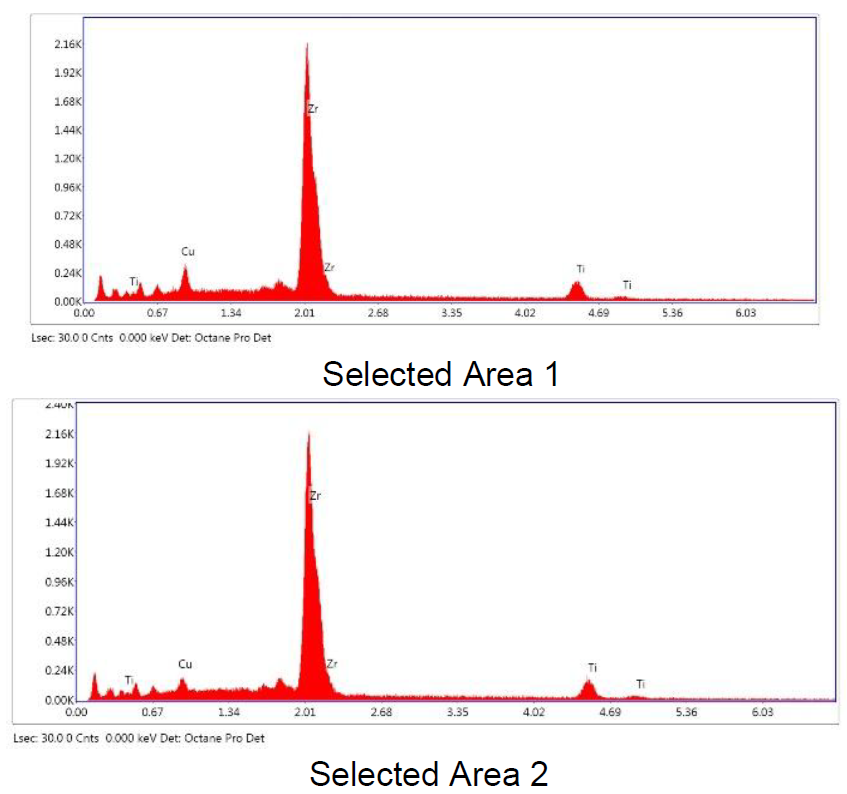
Implanted material is one of the solutions to overcome damage or the function of human organs. The many needs about implants or biomaterials make researchers continue to conduct various studies. One criterion as an implant material is that having good corrosion resistance so it does not have rejection from the body. This research aims to determine the corrosion behavior of Zr-Ti-Cu implant material in Lactated Ringer's solution. The Zr-Ti-Cu implant material uses a variation of 1% and 3% Cu content synthesized by the melting process using a Single Arc Melting Furnace with an atmospheric environment of argon. The results were characterized using an optical microscope and Vickers test equipment. Corrosion behavior of the Zr-Ti-Cu implant using a potentiostat with the Tafel polarization method in a Ringer's Lactated solution and Ringer’s Lactate solution that added with ulcer potion 10 mL. From the results of characterization with optical microscopy and XRD showed phases α-Zr and α-Ti, and intermetallic compounds Zr2Cu and Ti2Cu. Increasing Cu content can increase the hardness value so it has a hardness value between 528-619 HV. The addition of ulcer potion increases the corrosivity level of Ringer’s lactate solution. Corrosion resistance increased from 2,140 mpy to 1,571 mpy in Ringer's Lactate solution and from 2,060 mpy to 1,492 mpy in Ringer's Lactate solution with ulcer potion due to the addition of Cu in the alloy.
How to Cite




Downloads
|
|


|
|


Copyright © 2025 Talitha Ratna Dinanthi, Ekha Panji Syuryana, Djoko Hadi Prajitno

This work is licensed under a Creative Commons Attribution-ShareAlike 4.0 International License.
You are free to:
Share — copy and redistribute the material in any medium or format
Adapt — remix, transform, and build upon the material for any purpose, even commercially
Under the following terms:
Attribution — You must give appropriate credit, provide a link to the license, and indicate if changes were made. You may do so in any reasonable manner, but not in any way that suggests the licensor endorses you or your use.
ShareAlike — If you remix, transform, or build upon the material, you must distribute your contributions under the same license as the original
No additional restrictions — You may not apply legal terms or technological measures that legally restrict others from doing anything the license permits