
Peer Review Process
All manuscripts submitted to the Journal of Legal Contemplation (JLC) undergo a rigorous double-blind peer review process. Author and reviewer identities remain strictly anonymous to ensure objectivity, fairness, and academic integrity. This process is designed to guarantee that each manuscript is evaluated solely on its scholarly merit, methodological rigor, and contribution to legal knowledge.
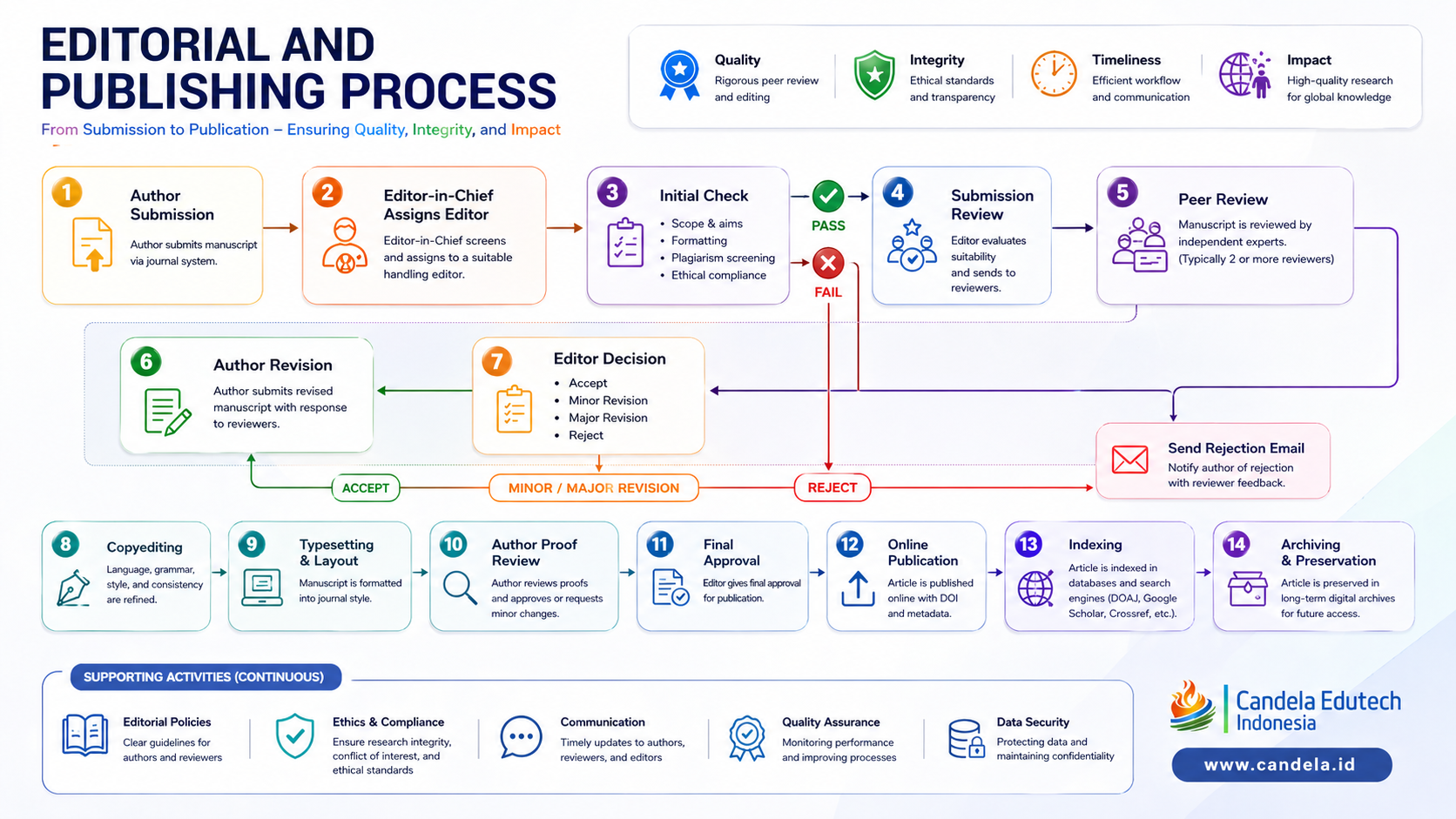
The peer review system implemented by JLC follows internationally recognized academic publishing standards. Each submitted manuscript is first assessed by the editorial board before being assigned to qualified reviewers. The entire workflow ensures transparency, quality control, and consistency in scholarly evaluation, while maintaining strict confidentiality throughout the process.
Peer Review Workflow
1
Editorial Screening
→
2
Double-Blind Review
→
3
Reviewer Evaluation
→
4
Editorial Decision
→
5
Author Revision
→
6
Publication
Process Explanation:
The peer review workflow begins with an editorial screening, where manuscripts are evaluated for scope alignment, originality, and compliance with journal formatting standards. Submissions that meet initial requirements proceed to the review stage.
During the double-blind peer review stage, manuscripts are evaluated by at least two independent experts. Reviewers assess the scientific quality, methodological robustness, analytical depth, and contribution to legal scholarship without knowledge of the authors' identities.
The reviewer evaluation stage focuses on providing structured feedback, including strengths, weaknesses, and recommendations for improvement. This ensures that authors receive constructive guidance for enhancing their work.
Based on reviewer reports, the editor issues a formal editorial decision, which may include acceptance, revision requests, or rejection. If revisions are required, authors must carefully address all reviewer comments during the revision stage.
Finally, manuscripts that satisfy all academic and editorial requirements proceed to publication, where they undergo final editing and formatting before being released in the journal issue.
The peer review workflow begins with an editorial screening, where manuscripts are evaluated for scope alignment, originality, and compliance with journal formatting standards. Submissions that meet initial requirements proceed to the review stage.
During the double-blind peer review stage, manuscripts are evaluated by at least two independent experts. Reviewers assess the scientific quality, methodological robustness, analytical depth, and contribution to legal scholarship without knowledge of the authors' identities.
The reviewer evaluation stage focuses on providing structured feedback, including strengths, weaknesses, and recommendations for improvement. This ensures that authors receive constructive guidance for enhancing their work.
Based on reviewer reports, the editor issues a formal editorial decision, which may include acceptance, revision requests, or rejection. If revisions are required, authors must carefully address all reviewer comments during the revision stage.
Finally, manuscripts that satisfy all academic and editorial requirements proceed to publication, where they undergo final editing and formatting before being released in the journal issue.
- Review duration: approximately 1–3 months depending on manuscript complexity
- All review activities are strictly confidential
- Double-blind anonymity is maintained throughout the process
- Authors must respond systematically to reviewer comments during revision
Journal of Legal Contemplation (JLC)
Peer-reviewed open access journal managed by Candela Edutech Indonesia
© All rights reserved | Academic integrity & publication ethics maintained